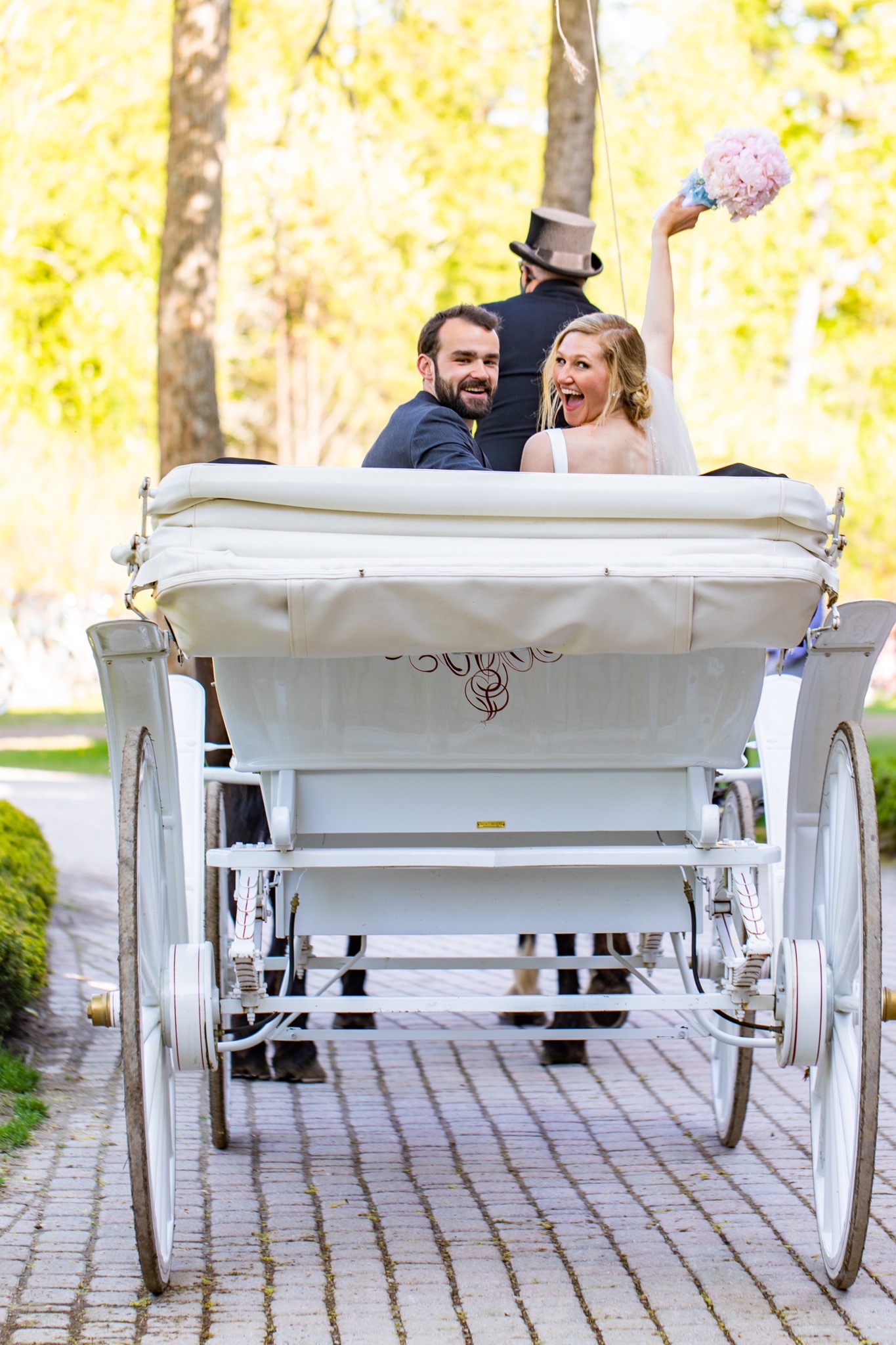
Life On The A-List

What It’s Really Like Getting Married on Mackinac Island 

Getting married on Mackinac Island isn’t just a wedding.

It’s an experience.

But it’s also very different from a mainland wedding.

Here’s what it’s actually like—so you can plan it right.


1. Everything Starts With the Ferry

There are no cars on Mackinac Island.

Which means:

• every guest
• every vendor
• every piece of equipment

👉 arrives by ferry

This adds complexity.

But it also creates something special:

From the moment your guests arrive…

it feels like a destination event.


2. Your Venue Sets the Entire Tone

Two of the most popular venues:

Grand Hotel
Mission Point Resort

Each offers a completely different vibe:

Grand Hotel
• formal
• iconic
• elevated, classic

Mission Point
• relaxed
• waterfront
• more modern feel

Inn at Stonecliffe
• secluded
• estate-style
• private, upscale garden party vibe

Island House Hotel
• historic
• intimate
• classic Mackinac charm right on Main Street

👉 Choosing your venue isn’t just logistics.

It’s the foundation of your entire experience—from guest vibe to dance floor energy.


3. Logistics Are Real (But Manageable)

This is where experience matters.

Things to plan for:

• vendor arrival timing
• equipment transport
• weather contingencies
• setup windows

A DJ who’s worked Mackinac before:

👉 already knows how to navigate this

That reduces stress—fast.


4. Your Guest Experience Is Next Level

This is where Mackinac shines.

Your wedding isn’t just a 6-hour event.

It’s:

• a weekend
• a getaway
• a shared experience

Guests explore:

• the island
• shops + restaurants
• the waterfront

👉 It becomes memorable beyond the wedding itself.


5. The Timeline Feels Different

Mackinac weddings tend to feel:

• more relaxed
• more intentional
• less rushed

Why?

Because people are “in it” for the full experience.

That gives you space to:

• enjoy moments
• connect with guests
• actually be present


6. Weather Is a Factor (Always)

It’s part of the charm.

But also part of the plan.

You need:

• backup options
• flexible timelines
• vendors who can adapt

Handled right…

👉 it’s not a problem

Handled poorly…

👉 it can throw everything off


7. The Reception Energy Is Different

Here’s something most people don’t expect:

Mackinac dance floors go OFF.

Why?

• guests are on vacation
• no one is rushing home
• everyone is more relaxed

That combination:

👉 creates incredible energy


8. It’s Not the Cheapest Option

Let’s be real.

A Mackinac wedding typically costs more than a mainland wedding.

Between:

• travel
• accommodations
• logistics

But what you get is:

👉 a one-of-a-kind experience


The Bottom Line

Mackinac Island weddings require more planning.

But they deliver more impact.

If you do it right, you get:

• a unique setting
• an unforgettable guest experience
• an incredible celebration


Thinking about getting married on Mackinac Island?
Work with vendors who know the island—it makes everything easier.

If you want help mapping the entertainment + flow, reach out and let’s build it right.
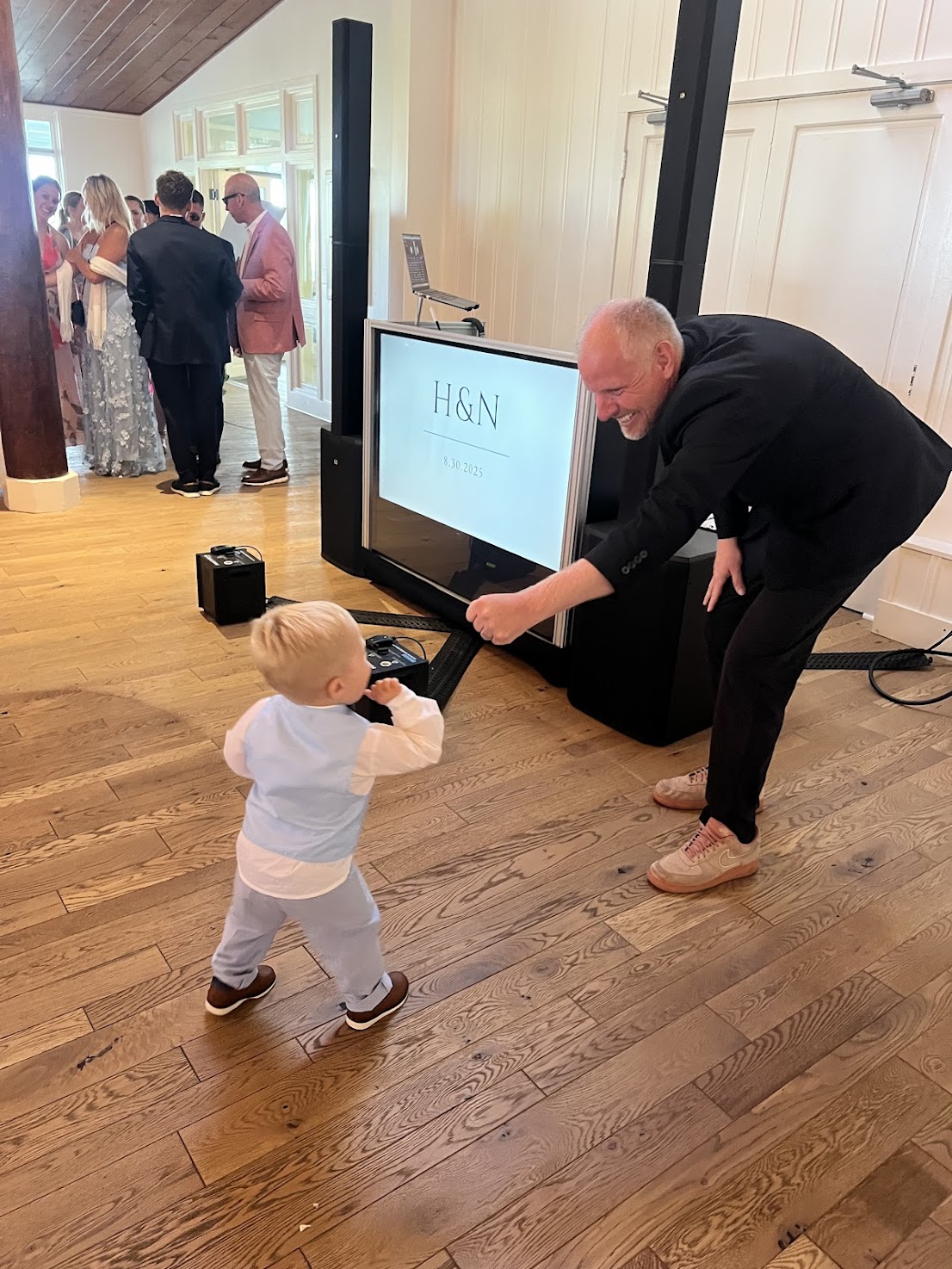
How to Keep Your Wedding Dance Floor Packed All Night 

Let’s be honest.

Every couple says they want a “fun wedding.”

What they actually mean is:

“We want a packed dance floor.”

Because that’s the difference between:
• a wedding people attend
• and a wedding people talk about for years

Here’s how to make that happen.


1. It Starts WAY Before the Dance Floor Opens

Most couples think the party starts after dinner.

Wrong.

A packed dance floor is built during:

• cocktail hour
• dinner pacing
• speeches timing

If the energy drags early…
you’re digging out of a hole all night.

👉 Momentum matters.


2. Your DJ Matters More Than Your Playlist

This is where most weddings go sideways.

A Spotify playlist:
• can’t read a room
• can’t adjust energy
• can’t recover from a dead floor

A professional DJ is doing three things in real time:

  1. Watching reactions
  2. Adjusting tempo + genre
  3. Knowing when to pivot instantly

That’s how you go from:

👉 “people standing around”
to
👉 “everybody yelling the lyrics”


3. Song Selection Isn’t About YOU

Hard truth:

The best dance floors are not built on your favorite songs.

They’re built on:

• songs people recognize instantly
• songs that hit across generations
• songs that trigger emotion + nostalgia

The goal isn’t “your vibe.”

The goal is:

maximum participation.


4. Transitions Are Everything

Anyone can press play.

Very few DJs can:

• mix seamlessly
• avoid energy dips
• stack hits back-to-back

That’s what keeps people on the floor.

Because once they leave…

👉 they rarely come back.


5. Your Timeline Can Kill the Party

Common mistakes:

• speeches too long
• too many interruptions
• late first dances
• dragging dinner service

Every stop/start moment:

👉 drains energy

The best weddings feel like a continuous build.


6. Lighting Changes Behavior (Seriously)

Dim lighting + intentional effects = people loosen up.

Bright room = hesitation.

It’s psychological.

This is why production matters:
• uplighting
• dance floor lighting
• room transformation

👉 It gives people permission to party.


7. The First 3 Songs Decide Everything

This is the moment.

If the first songs hit:

👉 the floor fills fast
👉 momentum builds
👉 people stay

If they miss:

👉 hesitation spreads
👉 energy stalls
👉 recovery is hard

There is no “warming up.”

You need a strong open.


8. You Need a Closer

Great weddings don’t fade out.

They end with:

• a full floor
• a final moment
• everyone all in

That’s what people remember.


The Bottom Line

Packed dance floors don’t happen by accident.

They’re engineered.

With:
• the right DJ
• the right flow
• the right decisions early

If the dance floor matters to you…

👉 it should be a priority, not an afterthought.


Planning a wedding in Grand Rapids or Mackinac Island?
If you want a full dance floor—not guesswork—reach out and let’s map it out.

Best Wedding Venues in Grand Rapids (With Real Dance Floor Tips) 

Planning a wedding in Grand Rapids?

Then you already know—your venue choice makes or breaks the party.

Not just how it looks.
How it flows.
How it feels.
How the dance floor actually performs at 10:30pm.

Most DJs won’t tell you this.

We will.


1. Amway Grand Plaza Hotel

Best for: Classic, upscale ballroom weddings

If you want timeless + impressive, this is it.

High ceilings. Big energy. Built for a full-scale production.

Dance Floor Reality:

• Works best with lighting + structure
• Large rooms can feel empty without a strong crowd anchor
• You NEED intentional timeline flow here

👉 If done right, this becomes a black-tie party that explodes late night

Pro Tip:
Start with a tighter dance set early. Build momentum. Don’t let the room feel too big too soon.


2. JW Marriott Grand Rapids

Best for: Modern luxury + city feel

Clean. Polished. High-end without feeling stuffy.

Dance Floor Reality:

• Great guest flow
• Strong built-in energy
• Works well for mixed-age crowds

👉 This is a balanced room—easy to build momentum if you don’t overcomplicate it.

Pro Tip:
Keep formalities tight. This room shines when you get to dancing sooner.


3. Venue3Two

Best for: Modern, all-in-one weddings

Efficient. Clean. Designed for flow.

Dance Floor Reality:

• Transitions are smooth
• Guests stay engaged
• Energy builds naturally

👉 This is a DJ-friendly room (translation: easier to keep packed)

Pro Tip:
Flip the room FAST. Dead time kills momentum. Keep guests moving.


4. Leona Road

Best for: Trendy, design-forward weddings

This is a vibe venue. Clean, aesthetic, intentional.

Dance Floor Reality:

• Guests love to linger in lounge areas
• Energy can spread out
• Needs a clear focal point

👉 If the dance floor isn’t visually dominant, you’ll feel it.

Pro Tip:
Use lighting + DJ placement to make the dance floor the “main stage.”


5. The Tower at McKay

Best for: Unique, statement weddings

Not your typical ballroom. This is for couples who want something different.

Dance Floor Reality:

• Layout dictates everything
• Vertical + architectural elements can distract
• Needs intentional crowd direction

👉 This is a strategy venue—done right, it feels electric.

Pro Tip:
Design the room around the dance floor—not the other way around.


6. Bella Giornata Events

Best for: Outdoor + tented luxury weddings

Open air. Elegant. Big “Michigan summer” energy.

Dance Floor Reality:

• Weather impacts everything
• Sound + lighting need to be dialed
• Energy can drift without structure

👉 Outdoor weddings require more control, not less.

Pro Tip:
Bring in lighting to create intimacy once the sun drops. That’s when the party starts.


7. The Cheney Place

Best for: Unique, character-driven weddings

If you don’t want a ballroom…this is your spot.

Historic. Eclectic. Full of personality.

Dance Floor Reality:

• Layout can work for you or against you
• Multiple rooms = potential energy leaks
• Guests spread unless you anchor them

👉 This is a high-reward, high-risk venue.

Done right? Electric.
Done wrong? Disconnected.

Pro Tip:
Place the dance floor where people naturally pass through—not off to the side. Then build your timeline to keep pulling guests back in.


The Truth Most Couples Miss

Here it is:

A great venue doesn’t guarantee a great party.

A weak plan in a beautiful room = empty dance floor.

A strong plan in the right room = packed all night.


What Actually Keeps a Dance Floor Packed

No matter the venue:

  1. Smart timeline flow
    No long gaps. No energy resets.
  2. Right room setup
    Dance floor placement is EVERYTHING.
  3. Music that adapts live
    Not a playlist. A read-the-room approach.

The Bottom Line

Your venue sets the stage.

But the execution creates the experience.


Want Help Choosing the Right Venue?

If you’re deciding between venues in Grand Rapids, we’ll tell you the truth—not just what looks good on Instagram.

👉 What works
👉 What doesn’t
👉 And how to make it unforgettable

Book a free consultation with A-List Event Group.

Your DJ Isn’t Just a DJ: 9 Moments They Quietly Control 

Most couples hire a DJ thinking about one thing: the dance floor.

But the truth is, your DJ (or entertainment team) quietly controls far more than the playlist.

At A-List Event Group, we approach weddings as live production. That means we’re not just playing music—we’re directing timing, managing transitions, and protecting the flow of the night so it feels effortless.

Here are 9 moments your DJ quietly controls—and why they matter.

1) The ceremony audio (so your vows are actually heard)

Outdoor wind, room acoustics, and mic technique can make vows hard to hear.

A professional team manages:

  • Mic placement and gain (no feedback, no dropouts)
  • Music cues for processional/recessional
  • A clean handoff between officiant, readers, and vows

When this is done right, the ceremony feels intimate—not chaotic.

2) The processional timing (so it feels cinematic, not rushed)

Walking order is one thing. Timing is another.

Your DJ controls:

  • When each song starts
  • When to fade or loop seamlessly
  • When to cue each group so spacing feels natural

It’s subtle—but it’s the difference between “nice” and “wow.”

3) Cocktail hour pacing (the tone-setter most people ignore)

Cocktail hour isn’t background noise. It’s the first chapter of your reception.

A great DJ team sets:

  • The vibe (upscale, warm, and conversational)
  • The volume (energy without shouting)
  • The momentum (so the room feels like it’s building toward something)

4) The grand entrance (and whether it feels confident or chaotic)

Entrances go sideways when nobody is directing the room.

Your DJ controls:

  • The lineup and name pronunciation
  • The cue timing with photo/video
  • The energy lift without making it feel cheesy

Big moment. Clean execution.

5) Microphones + speech flow (so toasts don’t drag)

Toasts can elevate the night—or drain it.

A pro DJ manages:

  • Mic handoffs and audio levels
  • Speaker coaching (distance, pacing, confidence)
  • The order and transitions so the room stays engaged

If guests start checking phones, it’s usually a pacing issue—not a “bad speech” issue.

6) Dinner timing (so the room doesn’t lose the plot)

Dinner is a reset, not a lull.

Your DJ coordinates with the planner and catering team to:

  • Avoid dead space between courses and moments
  • Place formalities strategically (not stacked back-to-back)
  • Keep the room warm and alive without overpowering conversation

7) The dance floor open (the first 10 minutes decide everything)

Anyone can play bangers. Not everyone can start a dance floor.

Your DJ controls:

  • The first set (inclusive, high-participation, confidence-building)
  • The transitions (no awkward stops)
  • The call-to-action (clear, not cringe)

Truth: the first 10 minutes decide the next 2 hours.

8) Peak-hour pacing (how long the floor stays packed)

Peak energy is a wave. Burn it out too fast and the room crashes.

A great DJ reads the room and controls:

  • Sequencing (when to hit, when to groove)
  • Genre pivots without losing people
  • Lighting/effects moments for impact—not overload

This is where “playing songs” becomes engineering energy.

9) The last song + exit (what guests remember on the ride home)

A night that fades out feels unfinished.

Your DJ controls:

  • The final push (victory lap energy)
  • The last song choice (anthem, sing-along, or emotional closer)
  • Coordination with venue and planner for a clean ending

Don’t let the night drift. Land it.

What to ask in your DJ consultation

If you want a reception that feels seamless, ask your entertainment team:

  • How do you design the flow of the night beyond the playlist?
  • Who coordinates with my planner, venue, and photo/video team?
  • How do you open the dance floor so it fills fast?
  • How do you pace peak hour so energy stays high?
  • What’s your plan if the room’s energy shifts?

The bottom line

Most DJs play music.

The best teams quietly control the moments that make your wedding feel effortless—so it starts sophisticated, builds with intention, and ends with a packed dance floor.

If you want a wedding that feels flawlessly produced, we’d love to help you design the timeline and engineer the experience.

Destination Weddings in Michigan: What Couples Forget to Plan For 

Michigan destination weddings are unreal in the best way: waterfront sunsets, historic resorts, island energy, and that “we’re all in this together” vibe you only get when guests travel.

But here’s the truth: destination weddings don’t fall apart because of big mistakes. They get stressful because of small details no one thought to plan for.

If you’re getting married somewhere like Mackinac Island, Traverse City, Petoskey, Bay Harbor, Glen Arbor, or anywhere along the Lake Michigan resort corridor, this is the checklist couples wish they had earlier.

1) Travel time isn’t just for guests

Couples plan guest travel beautifully… and forget vendor travel realities.

  • Ferry schedules, loading windows, and parking restrictions
  • Long drives + early setup times (and what that does to timelines)
  • Where vendors stage gear when access is limited

Plan for: vendor arrival buffers and a clear load-in plan with your venue.

2) Load-in and load-out rules can make or break your timeline

Resorts and historic properties often have strict rules:

  • Limited elevator access
  • Quiet hours
  • Specific doors/docks for deliveries
  • Tight windows for setup and teardown

Plan for: a timeline that accounts for logistics, not just “when the music starts.”

3) Weather pivots need a real Plan B (not a sentence)

On the lakeshore and on the Island, weather can change fast.

A true Plan B includes:

  • Where the ceremony moves and how guests get there
  • Where musicians/DJ setup relocates (power, coverage, protection)
  • Who makes the call and by what time

Plan for: a weather decision deadline and a communication chain.

4) Power and sound coverage aren’t guaranteed outdoors

Outdoor ceremonies and cocktail hours are common in destination settings, but they come with questions couples don’t know to ask:

  • Is there reliable power where you want the setup?
  • How far is the run (and what’s safe/allowed)?
  • Will guests actually hear vows over wind/waves?

Plan for: dedicated ceremony audio and a sound plan that matches the space.

5) Vendor coordination matters more when everyone’s remote

When your planner, photo/video, venue team, and entertainment team are all coordinating from different cities, assumptions multiply.

Common misses:

  • Who cues the processional and recessional?
  • Who releases tables for buffet?
  • Who confirms toast order and mic handoffs?

Plan for: one “show caller” for the night (and yes, that’s often your entertainment team).

6) Your reception flow needs to respect the venue’s rhythm

Destination venues often run on tight operational schedules:

  • Kitchen timing
  • Bar staffing and last call rules
  • Room flips between ceremony/cocktail/reception

Plan for: a reception arc that works with the venue, not against it.

7) Guest energy is different at destination weddings (use it)

Destination weddings create a built-in advantage: guests are invested.

But you still need to design the night so it builds naturally:

  • Don’t stack too many “sit and watch” moments
  • Open the dance floor with an inclusive first set
  • Pace peak hour so it stays packed

Plan for: an intentional energy arc—from elegance to electric.

8) Transportation is part of the production

Shuttles, ferries, and resort transit affect everything:

  • Ceremony start time
  • Grand entrance timing
  • End-of-night exit

Plan for: transportation buffers and a clear final send-off plan.

9) Noise ordinances and venue sound limits change your strategy

Some locations have strict sound rules (especially outdoors).

That doesn’t mean your night can’t be high-energy—it means your team needs a plan:

  • Speaker placement and coverage
  • Volume management
  • Lighting and pacing to keep intensity high without just “turning it up”

Plan for: a production approach, not a volume approach.

10) The “little” comfort details matter more when guests travel

When guests travel, they notice:

  • Clear signage and directions
  • Smooth transitions between locations
  • A timeline that doesn’t leave them waiting

Plan for: a guest experience mindset, not just a vendor checklist.

A quick destination wedding planning checklist

Use this as a final sanity check:

  • Confirm load-in/load-out rules and timing
  • Build a weather Plan B with a decision deadline
  • Ensure ceremony audio is covered (power + wind + coverage)
  • Align on who cues key moments (processional, entrances, toasts)
  • Confirm transportation buffers (start and end of night)
  • Review any sound limits and adjust production accordingly
  • Design the reception arc so energy builds intentionally

The bottom line

Destination weddings are unforgettable when the experience is engineered—not improvised.

If you want a reception that starts sophisticated and ends with a packed dance floor, the planning has to account for logistics, timing, and energy pacing before the first song plays.

If you’re planning a Michigan destination wedding, we’d love to help you build the timeline and produce the night—so it feels effortless for you and unforgettable for your guests.

The Wedding Reception Arc: From Elegance to a Packed Dance Floor 

Most receptions don’t fail because the music was “bad.” They fall flat because the flow was never designed.

At A-List Event Group, we treat your reception like a live production: we build the timeline, shape the energy, and direct the room so it starts sophisticated and ends with a dance floor that doesn’t quit.

Below is the reception arc we use to take a room from elegance to electric—without it ever feeling forced.

The goal: a night that feels effortless (because it was engineered)

A great reception has three ingredients working together:

  • Timeline architecture: The order and pacing of moments
  • Energy direction: When to elevate, when to breathe, when to peak
  • Room leadership: Clear MC guidance, vendor coordination, and confident transitions

When those are intentional, your guests don’t just “have fun.” They feel taken care of.

Phase 1: Arrival + Cocktail Hour (Set the tone)

This is where you establish the vibe: polished, welcoming, and elevated.

What we’re designing here: comfort and anticipation.

  • Music that feels like the venue: upscale, warm, and conversational
  • Volume that supports connection (not a shouting match)
  • A subtle “build” so guests feel momentum moving toward the main event

Pro tip: Cocktail hour is not background noise. It’s the first chapter of the story.

Phase 2: Grand Entrance (Create a clean lift)

The entrance is your first true energy spike. It should feel confident and cinematic—not chaotic.

What we’re designing here: a controlled rise.

  • Quick, clear instructions so the room knows what’s happening
  • Tight coordination with photo/video so you don’t repeat moments
  • A high-impact song choice that matches your personality (not a generic trend)

Rule: Big moment, short duration. Leave them wanting more.

Phase 3: First Dances (Make it emotional, not awkward)

This is where elegance becomes meaning.

What we’re designing here: emotional focus.

  • Lighting and room positioning that frames the moment
  • Microphone and volume balance so it feels intimate, not loud
  • A transition plan so the room doesn’t “drop” afterward

Pro tip: The best first dances don’t feel like a performance. They feel like a memory.

Phase 4: Dinner (Protect the room’s energy)

Dinner is a reset, not a lull.

What we’re designing here: sustained warmth.

  • Music that keeps the room alive without stealing attention
  • Timing that respects the kitchen and avoids dead space
  • Strategic placement of toasts so guests stay present

The mistake we avoid: stacking too many “sit and watch” moments back-to-back.

Phase 5: Toasts (Keep it tight, keep it classy)

Toasts can elevate the night—or drain it.

What we’re designing here: momentum with emotion.

  • Coach speakers on mic distance and pacing (yes, it matters)
  • Keep the lineup intentional (quality over quantity)
  • Use music stings and transitions to keep the room moving

Guideline: If the room starts checking phones, it’s too long.

Phase 6: The Dance Floor Open (Flip the switch)

This is the moment where “nice wedding” becomes “legendary night.”

What we’re designing here: a decisive shift.

  • A clear call-to-action that doesn’t feel cheesy
  • A first set that’s inclusive (not niche) to pull the room in
  • Quick wins: songs that create instant participation and confidence

Pro tip: The first 10 minutes decide the next 2 hours.

Phase 7: Peak Hour (Ride the wave, don’t burn it out)

Peak energy is a wave. The job is to keep it cresting—not crashing.

What we’re designing here: controlled intensity.

  • Read the room in real time and adjust the mix
  • Alternate “hands up” moments with groove to keep stamina high
  • Use lighting and effects intentionally (impact, not overload)

The difference-maker: pacing. Anyone can play bangers. Few can sequence them.

Phase 8: The Final Push + Last Song (End with intention)

A strong ending is what guests remember on the ride home.

What we’re designing here: a closing statement.

  • A final set that feels like a victory lap
  • A last song that matches your vibe (anthem, sing-along, or emotional closer)
  • A clean exit plan with your planner and venue so the ending feels seamless

Rule: Don’t let the night “fade out.” Land it.

What to ask your entertainment team (so you get this arc)

If you’re interviewing DJs, ask:

  • How do you design the flow of the night beyond the playlist?
  • How do you coordinate with my planner, venue, and photo/video team?
  • How do you open the dance floor so it fills fast?
  • How do you pace peak hour so it stays packed?
  • What’s your plan if the room’s energy shifts?

The bottom line:

You deserve more than someone who plays songs.

You deserve a team that produces your reception—so it begins with sophistication, builds with intention, and ends with a dance floor that feels like the best night of your life.

If you want help designing your reception arc, we’d love to learn your vision and build the plan around it.

What Premium Entertainment Production Actually Delivers 

You've probably heard it before: "You get what you pay for."
It's true. But it's also incomplete. The real question isn't why premium costs more. It's what you actually get for that investment.
At A-List Event Group, we produce experiential weddings. That means everything from design to execution costs more than hiring a solo DJ. Here's why—and what it delivers.
 

The Hidden Cost of Cheap Entertainment

Let's start with what happens when you book based on price alone.
Scenario 1: Solo DJ, minimal setup
  • One person managing music, MC duties, and energy
  • Limited equipment (basic speakers, no lighting or enhancements)
  • No contingency if something breaks
  • Energy management is reactive, not intentional
  • Guests experience: adequate music, flat energy, forgettable moments
The real cost to you:
  • Dancefloor empties during slow songs (no strategic pacing)
  • Timing issues (ceremony runs late, cocktail hour gets cut, dinner drags)
  • No premium moments (no sax fusion, no lighting design, no surprise elements)
  • Photos and video footage look amateur
  • Guests remember "it was fine," not "it was unforgettable"
Scenario 2: A-List Entertainment Collective
  • Collaborative DJs working together to manage energy and timing
  • Premium equipment (intelligent lighting, CO2 cannons, wireless mics, backup systems)
  • Specialized performers (sax fusion, live acoustic, roaming entertainment)
  • Event direction and timeline architecture
  • Intentional pacing from ceremony to send-off
What you actually get:
  • Packed dancefloor all night (strategic song selection + energy design)
  • Zero downtime (transitions are seamless, surprises keep momentum)
  • Premium moments that feel spontaneous but are carefully orchestrated
  • Professional-grade audio and lighting that elevates your venue
  • Photos and video that look like a production, not a party
  • Guests leave saying "that was the best wedding I've ever been to"

Breaking Down What Premium Actually Costs

Here's what goes into A-List's pricing:
Collaborative Team
  • Two award-winning DJs working together (not one person doing everything)
  • Sound technician managing equipment and troubleshooting
  • Lighting specialist operating intelligent rigs
  • Event director coordinating timing and cues
  • That's 4+ people, not 1
Equipment Investment
  • DJ controllers and backup systems: $5K+
  • Professional speakers and sound processing: $8K+
  • Intelligent lighting rigs: $10K+
  • Wireless microphones and in-ear monitors: $3K+
  • CO2 cannons, uplighting, effects: $5K+
  • Total equipment value: $30K+
We maintain, insure, and replace this equipment constantly. That cost is built into your event.
Specialized Performers
  • Sax fusion players: trained musicians, not background noise
  • Live acoustic artists: curated for your vibe and timeline
  • Roaming entertainment: magicians, performers, interactive elements
  • Each adds $500–$2K+ to production costs
Design & Consultation
  • Initial consultation to understand your vision
  • Timeline architecture (when every moment happens)
  • Vendor coordination (photographer, caterer, planner alignment)
  • Final planning meeting 2 weeks before your event
  • This isn't billable—it's included. But it costs us time and expertise.
Contingency & Insurance
  • $2M general liability insurance
  • Backup equipment for every critical system
  • Travel logistics (4-hour drive + ferry to Mackinac Island)
  • Weather contingencies and setup flexibility

What Premium Delivers (That Cheap Doesn't)

1. Intentional Energy Design Cheap: Music plays. Energy happens randomly. Premium: We architect your reception's emotional arc. Build energy, create intimate moments, deliver climax. Every song is placed strategically.
2. Zero Downtime Cheap: Gaps between songs. Awkward transitions. Guests check their phones. Premium: Seamless flow. Surprises keep momentum. Roaming entertainment fills gaps. Dancefloor stays packed.
3. Professional-Grade Production Value Cheap: Basic speakers. Flat lighting. Looks like a party. Premium: Intelligent lighting design. CO2 moments. Uplighting that transforms your venue. Looks like a production.
4. Collaborative Performance Cheap: One DJ managing everything (music + MC + energy). Premium: Two DJs working together, each focused on different elements. Sax fusion layers in live performance. Acoustic artists create emotional shifts. It feels orchestrated because it is.
5. Reliability & Contingency Cheap: One speaker dies, you're done. One DJ gets sick, event is compromised. Premium: Backup systems for every critical element. Team redundancy. Equipment that's been tested and maintained. Nothing fails.
6. Memorable Moments Cheap: Guests remember the music was good. Premium: Guests remember the moment the sax player came out. The silent disco surprise. The perfectly timed CO2 cannon. The energy that never dropped. The photos that look like a magazine shoot.
 

The Real ROI

Your wedding costs $30K–$100K+. Entertainment is typically 5–10% of that budget.
Investing in premium entertainment means:
  • Your guests have a better experience (and tell everyone about it)
  • Your photos and video look professional (you'll relive this for decades)
  • Your timeline runs flawlessly (no stress, no scrambling)
  • Your dancefloor stays packed (the ultimate sign of a great event)
  • Your investment in the entire day pays off (because the entertainment anchors it)
Cheap entertainment doesn't ruin your wedding. But it also doesn't elevate it.
 

Why A-List Costs What It Costs

We're not the cheapest option. We're also not the most expensive.
We're positioned at the intersection of:
  • Award-winning expertise (hundreds of weddings, celebrity clients, Fortune 500 events)
  • Collaborative team (not solo operators)
  • Premium equipment and enhancements
  • Intentional design (not just reactive DJing)
  • Reliability and contingency
That costs more because it delivers more.
 

The Question Isn't "Why Is It Expensive?"

The question is: "What experience do I want my guests to have?"
If you want adequate music and a functional event, hire a cheap DJ.
If you want an unforgettable night—one your guests will talk about for years, one that elevates your entire celebration, one where the entertainment is so seamlessly integrated it feels like the whole event was designed just for you—then you need an entertainment collective.
A-List Event Group specializes in experiential wedding production. We design, direct, and produce your reception with intentionality, expertise, and premium execution.
Your wedding deserves more than music. It deserves an experience.
Schedule a consultation to see how we engineer unforgettable moments.

Most wedding DJs focus on playlists. We focus on people. 

At A-List Event Group, we believe a wedding reception is not just an event — it’s a living, breathing experience that rises and falls on energy, timing, and intentional execution.

That’s why we don’t approach your wedding as just music. We approach it as a production.

From the moment your ceremony begins to the final song of the night, we orchestrate the emotional arc of your celebration — designing seamless transitions, managing momentum, reading the room, and creating packed dance floors without forced hype or gimmicks.

This is experiential wedding production.

It’s part music intelligence. Part event architecture. Part master of ceremony. And entirely intentional.

Our couples don’t hire us because they need someone to press play.

They hire us because they want:

A reception that flows effortlessly

Guests who stay on the dance floor

A room that feels electric — but elevated

Confidence that every moment is handled

With hundreds of weddings produced across Michigan’s most respected venues, we bring the calm authority, preparation, and expertise that transforms a wedding reception into the night everyone talks about for years.

You deserve more than a DJ.

You deserve an experience.

You’re Not Paying Us to “DJ” — You’re Paying for Expertise 

Our couples don’t want a cookie-cutter wedding. You want a night that feels like you—the right vibe, the right moments, and a dance floor that doesn’t die after two songs.

That’s why when you hire A-List Event Group, you’re not paying us to “DJ.” You’re investing in expertise: the kind that makes the entire night feel effortless, elevated, and unforgettable.

“DJ” is the job title. Expertise is the product.

Anyone can show up with speakers and a playlist.

What couples actually want is someone who can:

Read the room in real time

Nail the timing of the biggest moments

Keep the energy building without making it cringe

Protect the flow so you’re not stressed (or micromanaging)

Make it feel premium without feeling overproduced

That’s not just music. That’s leadership.

The vibe doesn’t happen by accident

Your wedding has multiple “chapters,” and each one needs a different energy:

Ceremony: emotional, clean, and perfectly cued

Cocktail hour: stylish, social, and easy

Dinner: background that still feels intentional

Dancing: full-send, no dead zones

Our job is to design those transitions so the night has momentum. When it’s done right, you don’t notice the work—you just feel how smooth everything is.

Our couples care about the experience (and the receipts)

You’re planning a celebration that will live forever:

In your camera roll

In your friends’ stories

In the videos you’ll rewatch for years

That means the moments matter. The entrance. The first dance. The “everyone’s on the floor” song. The late-night run of bangers that turns the reception into a core memory.

A great DJ doesn’t just play songs—they produce moments that photograph and film well, feel authentic, and keep guests locked in.

What you’re really paying for

Here’s what our couples are actually investing in:

1) Calm, confident planning

You shouldn’t have to chase your vendors or wonder if things are handled. We bring a real process, clear communication, and guidance that keeps you organized.

2) Timeline control without the awkwardness

We keep the night moving, make announcements that don’t feel like a middle-school assembly, and coordinate with your venue and vendors so everything lands.

3) Crowd-reading + musical direction

Your playlist matters. Your “do not play” list matters too. But the real magic is knowing what to play next—based on your guests, your room, and your energy.

4) Professional-grade production

Sound that’s clean. Microphones that work. Lighting that transforms the room. Enhancements that create real “wow” moments.

“Worth it?” Our couples say, “yes.”

Our couples tell us the investment was worth it—because the experience is what they remember.

Not the centerpieces. Not the chair covers.

The way the night felt.

When the music is right, the timing is right, and the flow is right, you get the one thing you can’t fake:

A room full of people having the time of their lives.

If you want a wedding that feels like you, hire the team that can run the night

If you’re a couple who cares about vibe, authenticity, and a dance floor that goes off—don’t settle for someone who just “plays music.”

Hire the team that can:

Lead the timeline

Read the room

Build the energy

Deliver a premium experience

Because you’re not paying for a DJ.

You’re paying for expertise.

Ready to build a night you’ll never forget?

Explore A-List Event Group and inquire here: https://www.alisteventgroup.com

From Mackinac Island to Grand Rapids: How Complex Logistics Made Us Ready for Events Anywhere 

If you’ve ever planned an event on Mackinac Island, you already know: it’s not “just another venue.” It’s a destination with unique rules, tight timelines, and real-world transportation challenges that can make even simple setups feel like a production.

For A-List Event Group, Mackinac Island isn’t just a market—it’s a training ground. Year after year, producing weddings and events on the Island has sharpened our process, strengthened our team, and built a level of logistical discipline that translates to events in Grand Rapids, across Michigan, and anywhere in the world.

Mackinac Island forces you to plan like a producer

On the mainland, it’s easy to assume you can “run back” for something.

On Mackinac Island, you can’t.

When your equipment and team have to move through ferries, docks, and strict load-in windows, there’s no room for guesswork. That environment builds habits that carry into every event we produce:

Redundancy and backups (because failure isn’t an option)

Tight timelines (because access windows are real)

Clear communication (because everyone needs to be aligned)

Equipment discipline (because you can’t improvise missing gear)

That’s what we mean when we say the Island has “sharpened our saw.” It’s made us better—everywhere.

The Island teaches one thing above all: execution matters

Beautiful plans don’t matter if the execution is sloppy.

Mackinac Island events demand:

Early arrivals and proactive setup

Efficient load-in and breakdown

Calm leadership when conditions change

A team that can adapt without disrupting the guest experience

That’s a big reason our clients describe our work as polished and stress-free. The behind-the-scenes complexity is real—but the experience for the client should feel effortless.

What this means for Grand Rapids events

Grand Rapids is a different kind of market: more venues, more corporate opportunities, more variety in event formats. But the standard for professionalism is high—especially for upscale weddings, galas, and brand-forward corporate events.

Because we’ve built our systems in one of the most logistically demanding environments in Michigan, we bring a level of readiness that fits Grand Rapids perfectly.

1) Venue-to-venue coordination feels easy

In Grand Rapids, you might be working with:

Downtown hotels and ballrooms

Large event centers

Historic venues with unique load-in requirements

Multi-room events with separate timelines

Our Mackinac Island experience trains us to think ahead, coordinate early, and protect the flow of the night—so your event stays on schedule and feels seamless.

2) Premium experiences require premium production

Grand Rapids clients aren’t just looking for “a DJ.” They want an experience that matches the room.

That’s why we approach events as experiential producers—combining entertainment with production elements that elevate the atmosphere:

Uplighting and intelligent lighting

Photobooths

Cold sparkler fountains

CO2 and specialty effects

Custom DJ booth aesthetics

The Island taught us how to deliver premium experiences under pressure. Grand Rapids gets the benefit.

3) We’re built for destination weddings—so local planning is effortless

Many Grand Rapids weddings are destination weddings for someone—whether guests are traveling from out of state, or the couple is planning from afar.

We’re used to remote planning and clear communication. That means:

Simple planning tools

Organized timelines

Clear next steps

A team that shows up early and prepared

“Events anywhere in the world” isn’t a tagline—it’s a mindset

When you can consistently produce high-end events on Mackinac Island, you develop a mindset that scales:

You plan earlier

You confirm details more thoroughly

You bring backups

You communicate clearly

You protect the guest experience at all costs

That mindset is what allows us to confidently take on events in Grand Rapids, across Michigan, and beyond.

Why Grand Rapids clients choose A-List Event Group

Our clients hire us because they want more than music—they want confidence.

They want a team that:

Leads the room without making it about themselves

Keeps the timeline moving without feeling pushy

Reads the crowd and builds energy naturally

Produces a premium look and feel

Handles logistics like professionals

Whether it’s a wedding reception, a corporate gala, or a large-scale celebration, we bring the same standard we’ve built on Mackinac Island.

Planning an event in Grand Rapids?

If you’re looking for a Grand Rapids DJ team that operates like event producers—built on years of experience in one of Michigan’s most complex event environments—we’d love to help.

Explore our work and connect with A-List Event Group at https://www.alisteventgroup.com

Serving Grand Rapids, West Michigan, Mackinac Island, and destination events worldwide.